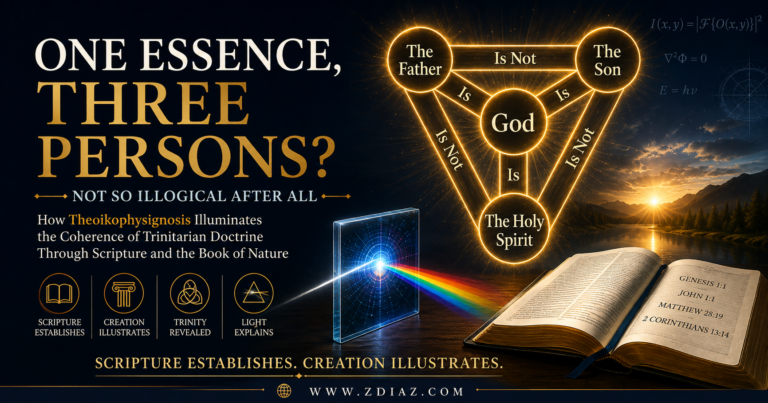
One essence, three persons: is the Trinity really a contradiction? This post begins with Scripture, tracing the biblical and original-language foundations of Trinitarian doctrine, before turning to Theoikophysignosis and the physics of light as a carefully limited analogy for understanding how unity and distinction can coexist without logical contradiction. The argument does not attempt to prove the Trinity through science. Scripture establishes the doctrine; creation serves only to illustrate its coherence. The result is a case for moving the discussion from contradiction to mystery. A full scholarly essay is available for download at the end of the post. A companion podcast episode is also available there for those who prefer listening over reading.
OSAS: A Doctrine Diluted
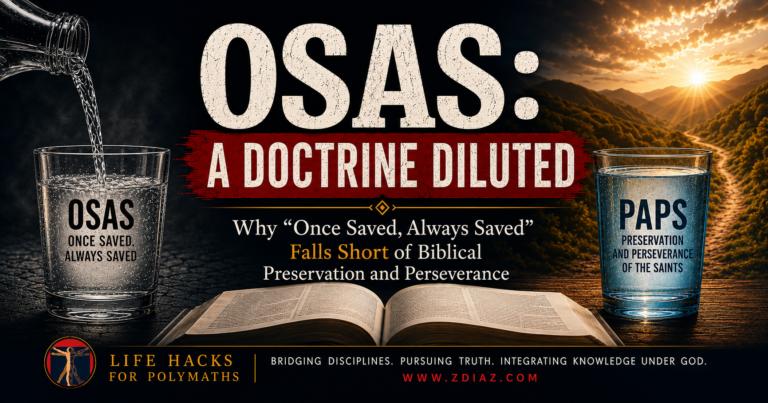
Is “Once Saved, Always Saved” the full biblical doctrine of eternal security or only a diluted version of it? This article argues that OSAS affirms an important truth but often leaves out the equally biblical doctrine of perseverance. Readers will see how Scripture presents salvation as both God’s preservation of his people and their continuing faith in Christ to the end. The article examines key passages in the Scriptures. It also explains how biblical warnings against apostasy function as means God uses to preserve believers rather than as denials of eternal security. Historically, the discussion traces the doctrine from Augustine through the Reformed confessions and shows why OSAS is better understood as a later, thinner abbreviation of the fuller doctrine of the Preservation and Perseverance of the Saints. Readers will discover why true assurance rests not merely in a past profession of faith, but in God’s continuing grace that sustains faith, repentance, holiness, and endurance. The article ultimately argues that those whom God truly saves, he preserves, and those whom he preserves persevere until final glorification. A companion podcast episode is also available there for those who prefer listening over reading.
Mystery or Missing Ground?
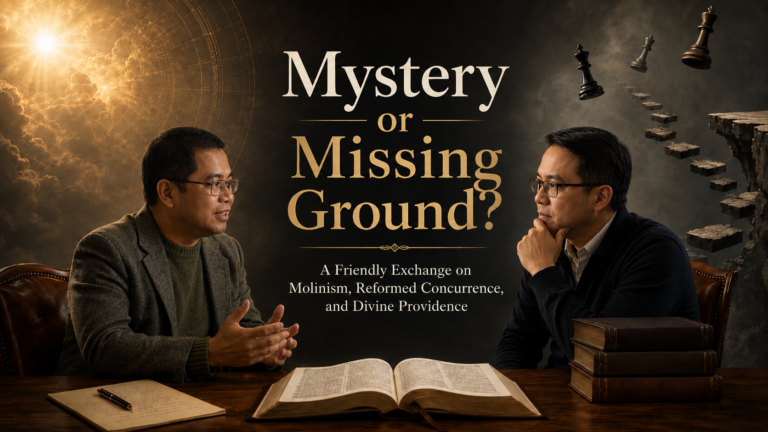
What began as a friendly Facebook exchange with a fellow believer developed into a broader theological and philosophical discussion of Molinism, Reformed concurrence, divine providence, and human freedom. This blog post presents that discussion in clear, accessible language, asking whether Molinism genuinely resolves the tension between God’s comprehensive sovereignty and responsible human agency, or whether it simply relocates the mystery by making God’s decree dependent on counterfactual truths that He neither determines nor grounds. The discussion first examines the grounding objection to middle knowledge and distinguishes the biblical affirmation of God’s counterfactual knowledge from the additional philosophical claims distinctive of Molinism. It then turns to a new meta-theological framework, Theoikophysignosis, which provides a method for evaluating the competing positions and for developing a constructive account of Reformed concurrence. The central question is whether Calvinism faces an acknowledged mystery whose mechanism remains underspecified (until lately), while Molinism rests upon the more foundational problem of missing ground. A full scholarly essay is available for download at the end of the post. A companion podcast episode is also available there for those who prefer listening over reading.
Inspired Text, Unscriptural Stricture
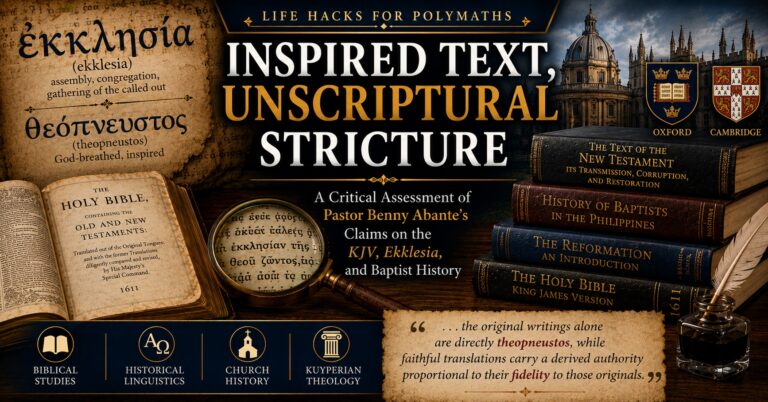
Is a pastor qualified to declare who is and isn’t saved, including men who lived four centuries ago?Is your pastor qualified to declare who is and isn’t saved, including men who lived four centuries ago? Pastor Benny Abante’s viral statements about the King James Version, the Greek word ekklesia, and the Anabaptists contain some important truths, some partial truths, and some significant errors. This article examines each claim fairly and honestly: what he got wrong, what he got partially right, and what he got right. You can download the scholarly paper or listen to the companion podcast episode on Spotify if you prefer to listen rather than read at the end of the post.
Too Heavenly Minded, Too Earthly Useless?- Why the Church Must Respond to the Issues Tearing Apart the Nation
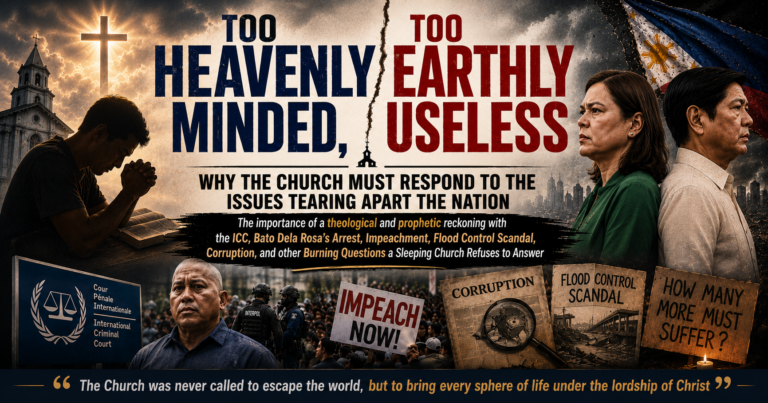
“What is this going to profit the body of Christ?” That question, asked in response to a theological paper on the ICC controversy and Bato dela Rosa’s arrest, reveals a deeper problem within the modern Church itself. Somewhere along the way, many Christians began treating justice, governance, abuse of power, and national moral responsibility as “too political” for the gospel. But Scripture tells a different story. The prophets confronted kings. John the Baptist rebuked rulers. Paul reasoned about justice before governors. The Church was never called to escape the world, but to bring every sphere of life under the Lordship of Christ. This article is a theological and prophetic reckoning with the burning issues tearing apart the nation, and a challenge to a sleeping Church that too often remains silent while society collapses around it
- 1
- 2
- 3
- …
- 15
- Next Page »