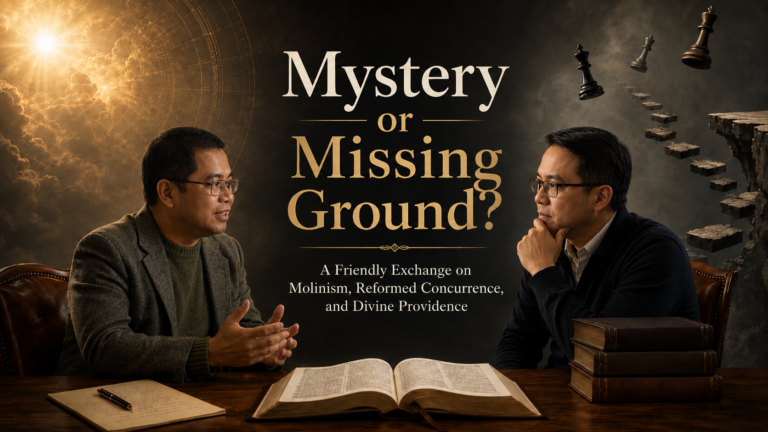
What began as a friendly Facebook exchange with a fellow believer developed into a broader theological and philosophical discussion of Molinism, Reformed concurrence, divine providence, and human freedom. This blog post presents that discussion in clear, accessible language, asking whether Molinism genuinely resolves the tension between God’s comprehensive sovereignty and responsible human agency, or whether it simply relocates the mystery by making God’s decree dependent on counterfactual truths that He neither determines nor grounds. The discussion first examines the grounding objection to middle knowledge and distinguishes the biblical affirmation of God’s counterfactual knowledge from the additional philosophical claims distinctive of Molinism. It then turns to a new meta-theological framework, Theoikophysignosis, which provides a method for evaluating the competing positions and for developing a constructive account of Reformed concurrence. The central question is whether Calvinism faces an acknowledged mystery whose mechanism remains underspecified (until lately), while Molinism rests upon the more foundational problem of missing ground. A full scholarly essay is available for download at the end of the post. A companion podcast episode is also available there for those who prefer listening over reading.
Multidisciplinary | Cross-Disciplinary | Interdisciplinary | Transdisciplinary.