Life Hacks for Polymaths

Multidisciplinary | Cross-Disciplinary | Interdisciplinary | Transdisciplinary.

  • Facebook
  • Instagram
  • LinkedIn
  • Pinterest
  • YouTube

Welcome, Polymaths!

I’m Zigfred Diaz — polymath, independent scholar, &  lifelong learner integrating multidisciplinary, cross-disciplinary, interdisciplinary & transdisciplinary ideas through a broader theological meta-narrative that serves as my guiding interpretive framework. Feel free to explore.

Powered by Genesis

  • Home
  • About
  • Privacy Policy
  • Archives
  • Categories
    • Book reviews
    • Life Hack for Polymaths
      • Featured Polymaths
      • Life-work Balance
      • Productivity
      • Miscellaneous Ramblings
      • My Life long learnings experiences
    • Business, Entrepreneurship & Leadership
    • Events
    • Financial management & investments
    • Fraud alert
    • Health
    • Hot trends
    • Law, Law Practice, Law Education
    • Making money online, Blogging, SEO
    • Music
    • Politics, Social issues & Current events
    • Reviews
    • Sports
    • Technology
      • Word Press tips
    • Theology, Faith & inspirational
    • Travel and Living
    • Cognitive Archeology
    • Social Work
    • Theology
    • Uncategorized
  • Contact

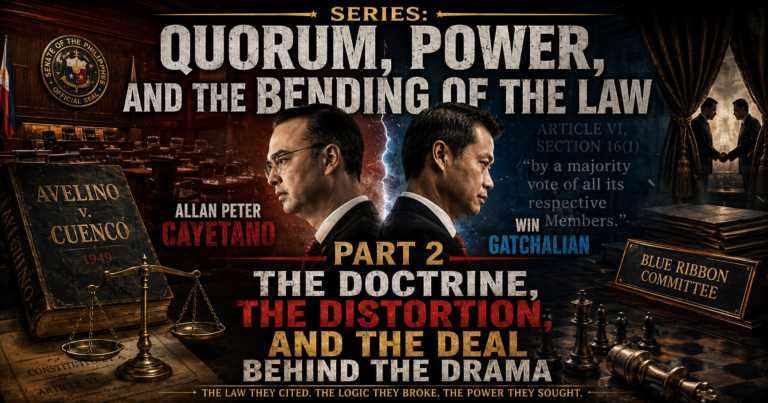
Quorum, Power, and the Bending of the Law, Part 2: The Doctrine, the Distortion, and the Deal Behind the Drama.

June 4, 2026 by Zigfred Diaz Leave a Comment

In Part 1, we looked at what happened when twelve senators reorganized the Senate on June 3, 2026. In Part 2, we ask a different question: Did they actually have the legal authority to do it? The senators relied on a 1949 Supreme Court case called Avelino v. Cuenco, but does that case still apply under the 1987 Constitution? This post explains the controversy in plain language, examines a legal argument that many commentators missed, and explores why some believe the real battle was not about impeachment at all, but about control of a major corruption investigation. Beyond constitutional law, we also examine the issue through the lenses of political science, political economy, sociology, philosophy, comparative jurisprudence, and Reformed theology. Each lens helps answer a different question: How do political actors manipulate institutions? What incentives drive their decisions? How is public perception shaped? Does the precedent really fit the facts? And was the Senate being used for its proper purpose? By bringing these perspectives together, we gain a fuller picture of what may have happened on June 3 than constitutional law alone can provide. The complete scholarly paper is available for download at the end of this post. If the Constitution says one thing and politicians say another, who should we believe? And if the rules can be interpreted differently depending on who benefits, what does that mean for ordinary Filipinos?

Filed Under: Cross-disciplinary, Hot trends, Interdisciplinary, Law, Law, Law Practice, Law Education, Multidisciplinary, My Life long learnings experiences, Philosophy, Political Science, Politics, Social issues & Current events, Sociology, Theological meta-framework, Transdisciplinary Tagged With: Alan Peter Cayetano, Avelino v. Cuenco, Blue Ribbon Committee, Comparative Jurisprudence, constitutional crisis, Constitutional Interpretation, constitutional law, Constitutional Theory, Democratic Governance, flood control scandal, Institutional Subversion, June 3 Senate Session, Jurisprudence, legal analysis, Legislative Governance, Philippine Constitution, Philippine governance, Philippine politics, Philippine Public Policy, Philippine Senate, Political Accountability, political analysis, Political Drama, Political Economy, Power and the Bending of the Law, Public Theology, Quorum, Reformed Political Theology, Rule of Law, Sara Duterte impeachment, Senate Committees, Senate Controversy, Senate leadership, Senate President Pro Tempore, Senate quorum, Senate Rules, Senate Teleserye, Separation of Powers, Win Gatchalian

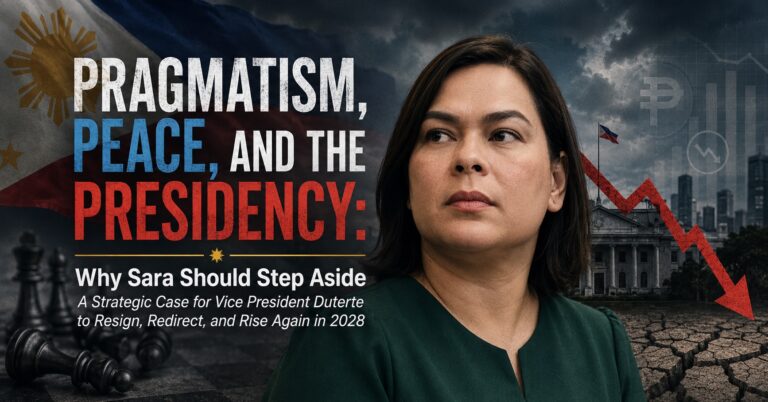
Pragmatism, Peace and the Presidency: Why VP Sara Duterete should resign
May 13, 2026 by Zigfred Diaz 2 Comments

With GDP growth at a five-year low, OFW remittances threatened by the US-Iran conflict, and the Senate lurching through its second leadership change in months, the Philippines cannot afford its current political paralysis. The Philippines is bleeding economically while its leaders wage political war. In the article, I present the best pragmatic, strategic, and moral argument that Vice President Sara Duterte voluntarily resign. It is not an act of surrender, it is the shrewdest political move available to her. The 2028 path clears. And a nation desperate for statesmanship finally gets it. FULL paper can be downloaded at the end of the post.

Filed Under: Hot trends, Law, Law Practice, Law Education, My Life long learnings experiences, Political Science, Politics, Social issues & Current events, Strategy Tagged With: Marcos Duterte feud, OFW remittances, Philippine economy 2026, Philippine presidential election 2028, Philippine Senate 2026, political instability Philippines, Sara Duterte, Sara Duterte 2028, Sara Duterte impeachment, US Iran war Philippines impact, why sara duterte should resign

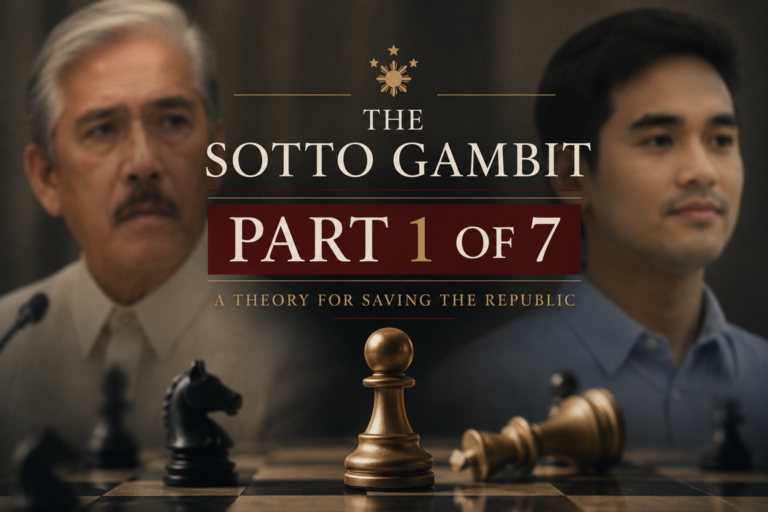
The Sotto Gambit, Part 1: A Theory for Saving the Republic
May 7, 2026 by Zigfred Diaz Leave a Comment

The Philippines faces surging inflation, an economy stagnating below its own targets, and leaders consumed by political warfare instead of governance. Yet the 2028 election under existing rules will produce one of three outcomes: a Marcos-endorsed successor inheriting the same corruption networks, a Duterte running a vengeance presidency, or a well-intentioned opposition leader trapped inside the same broken institutional cage. None of these changes the system. The SOTTO GAMBIT argues that the Philippines can do something different, legally and constitutionally, before 2028 closes the window. Learn more about it. This is Part 1 of a 7-part series. The FULL PAPER may, however, already be downloaded from the first post and from every post thereafter.

Filed Under: Hot trends, Law, Law Practice, Law Education, My Life long learnings experiences, Political Science, Political Science, Strategy Tagged With: 2028 elections, Charter change, Con-Con Philippines, constitutional reform, democratic reset, Duterte, Marcos administration, Philippine democracy, Philippine inflation, Philippine politics, political theory, Sara Duterte impeachment, Sotto Gambit, Vicente Sotto III, Vico Sotto