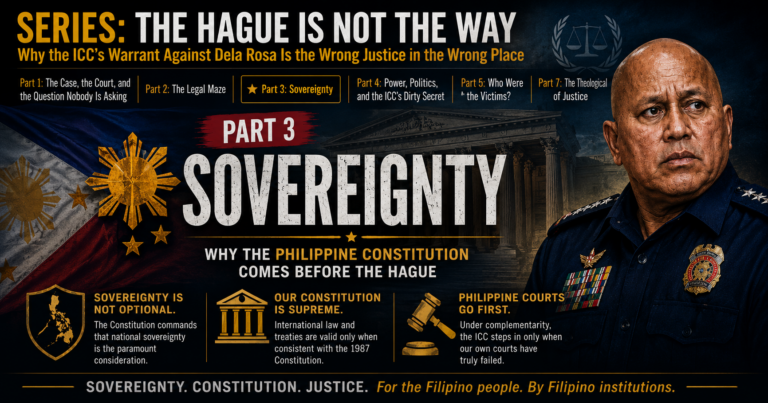
The Philippines has its own Constitution, its own courts, and its own laws that cover exactly the kind of crimes being talked about in the Dela Rosa case. So why is a Filipino senator being taken to a court in the Hague Netherlands? This post breaks it down in plain language: what the Philippine Constitution actually says about outside courts having power over Filipino citizens, why the ICC was never supposed to be the first stop for justice, how the collapse of the Marcos and Duterte alliance changed the political picture entirely, and why the law most people think proves the ICC’s case actually does the opposite. No legal background needed. And if you want the full deep dive with complete legal citations and academic analysis, the FULL scholarly paper that is the basis for the entire seven part blogpost is available for download at the end of this post.
The Hague Is Not The Way, Part 1: The Case, the Court, and the Question Nobody Is Asking
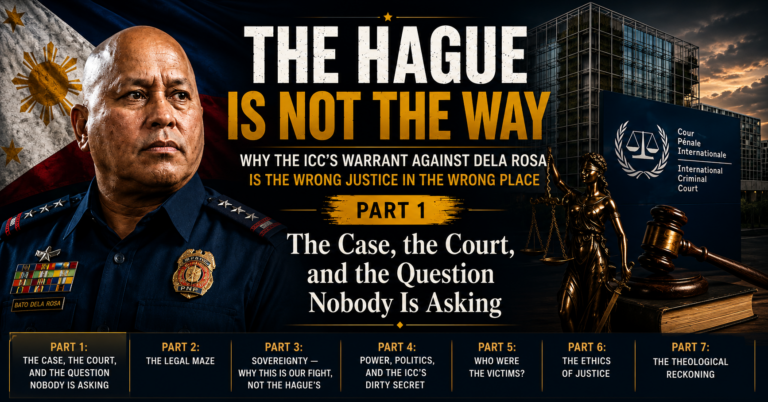
The ICC issued an arrest warrant against Senator Ronald “Bato” Dela Rosa. Everyone has an opinion. Very few have a framework. Before we debate guilt or innocence, we need to ask the question nobody is asking: is the ICC even the right court? This series breaks down a 62-page scholarly paper into plain, accessible language that any reader can follow. For those who want the full academic treatment, the complete paper with all citations, legal analysis, and theoretical frameworks is available for free download at the end of each post. This is Part 1 of 7 of a multidisciplinary, cross-disciplinary, and normative transdisciplinary scholarly series examining the case through nine academic lenses integrated through a theological meta-framework. The answer may surprise you.