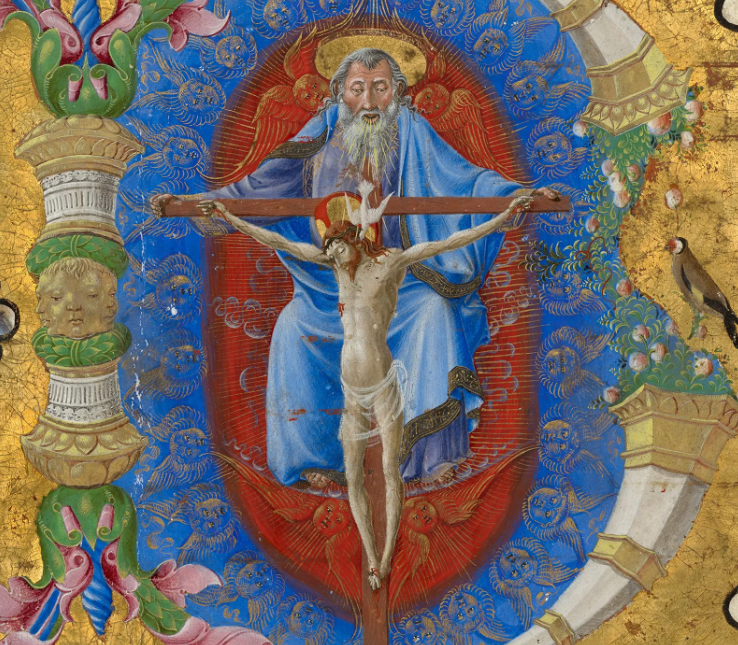
There is probably no other greater theological concept that requires that use of analogical language to describe the divine nature than that of the Trinity. The mysterious truth about the triune nature of God has been fiercely debated upon throughout church history and oftentimes analogies are used in order to somehow try to thresh out its truths but somehow nothing seems to be enough to explain such profound and mysterious truths. A common analogy about the Trinity is water wherein it can manifest itself into either solid as ice or frozen water, liquid and as gas in the form of water vapor. These three are in different forms and yet they are still the same, it is basically water. Similarly, the analogy goes that God manifest himself as the Father, the Son, and the Holy Spirit but they are the same God. The problem with this analogy however is that it would lead to a heretical understanding of the Trinity which has been combatted by the early church known as modalism. This heresy has … [Read more...]
Identifying the Neural Substrates of Cognitive Evolution and its Implications from a Christian Perspective

Considering its theoretical nature, the study Cognitive Archeology continues to grow year by year as ideas on the evolution of cognition and as theories on the interpretation of thoughts and symbolic structures as perceived in past material culture continues to abound. Despite the deluge of ideas on the evolution of cognition, most approaches have been “general” in nature. There has been general discussion on the classification of intelligence, it's possible evolution and the possible causes of such, however, works identifying the specific neural substrates that is involved in the evolution of cognition has been rare. This is of course understandable as the archeological record does not leave any evidence of brain re-organization and that there is no direct measure of behavioral change add to this is the fact that much of the brain continues to be shrouded in mystery. Despite all of these, nevertheless advances have been made in brain science which is further made possible by … [Read more...]
Has the Vatican corrupted modern Bible translations?

In the complex landscape of biblical scholarship and translation, the N0vum Testamentum Graece (New Testament in Greek) otherwise popularly known as the Nestle-Aland Greek New Testament (After its after its most influential editors, Eberhard Nestle and Kurt Aland), stands out as a cornerstone for contemporary biblical research and translation. This revered text, now in its 28th edition (released in 2012), represents a collaboration between the New Testament Textual Research (INTF), the Vatican and the United Bible Societies (UBS) that aims to provide an accurate and reliable Greek text of the New Testament. This scholarly cooperation started in the early 1960s in the 25th edition of the Novum Testamentum Graece and underscores a shared commitment to textual integrity across Christian denominations and has been widely adopted by Bible Societies globally. However, this edition has not been without controversy. It finds itself at the center of heated debates, particularly from the … [Read more...]
Debunking KJV Onlyism: Stephen full of grace or full of faith?
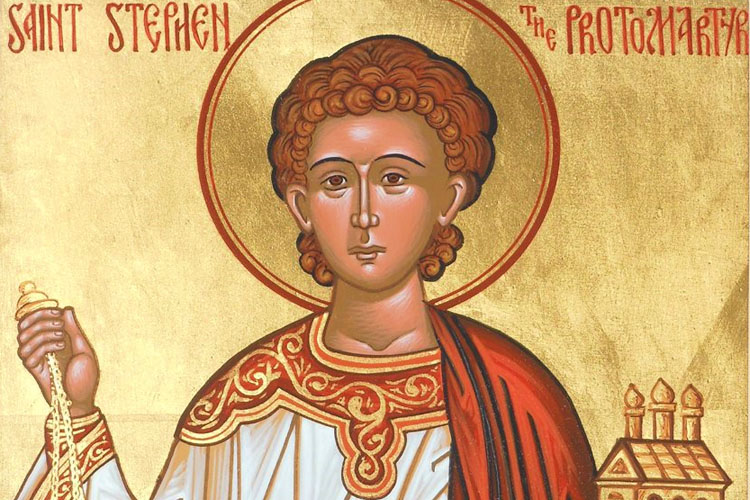
Question: In the KJV Acts 6:8 describes Stephen as being "full of faith and power" while modern Bible translations describe him as being "full of grace and power." KJV Onlyist insist that modern translations are wrong and some extremist even go as far as saying that modern translation translate it this way because they support the perpetual virginity of Mary as modern translations uses "full of grace" in describing Stephen in the same way as Mary is being described as "full of grace" Roman Catholics. In this particular text, Acts 6:8, the Majority Texts which is the basis of the KJV, uses "pisteos" (faith), whereas several older manuscripts, the underlying Greek text used by most modern translations employs "charitos" (which means conveying grace or favor). image from youth.rcdow.org.uk (Acts 6:5) And the saying pleased the whole multitude: and they chose Stephen, a man full of faith and of the Holy Ghost, and Philip, and Prochorus, and Nicanor, and Timon, and … [Read more...]
Is the emergence of human behaviour gradual or a result of a “revolution”?
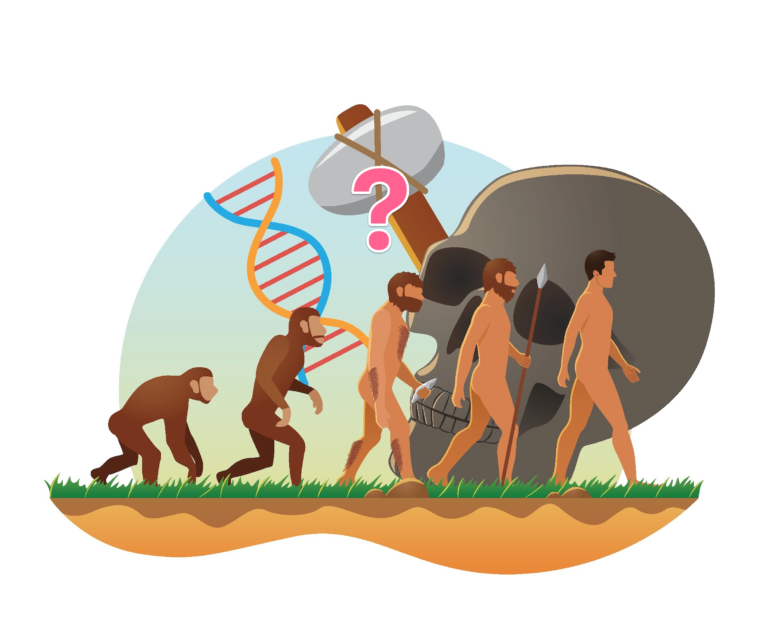
When did language, culture, consciousness and “modern” human behavior as we perceived it to be, begun? Did it begin 10,000, 30,000, 50,000 or 300,000 years ago? When did it all start? What are the reasons for its emergence? How did it all begin? These are the nagging questions that Cognitive archeology and other disciplines related to the study of man and origins are trying to answer The debate rages on. In the battle of ideas, the war is being fought through words. Warring factions have taken their positions and the camp has been divided into two. The first major faction argues that modern human behavior arose suddenly and nearly simultaneously some 40,000 to 50,000 years ago. As to why this happened, proponents of this idea however cannot agree to the cause of this and this camp can be subdivided further. Some believe that this was all caused by a genetic mutation. Other contend that this “Human Revolution,” “Upper Paleolithic Revolution” or what others would like to call as the … [Read more...]