
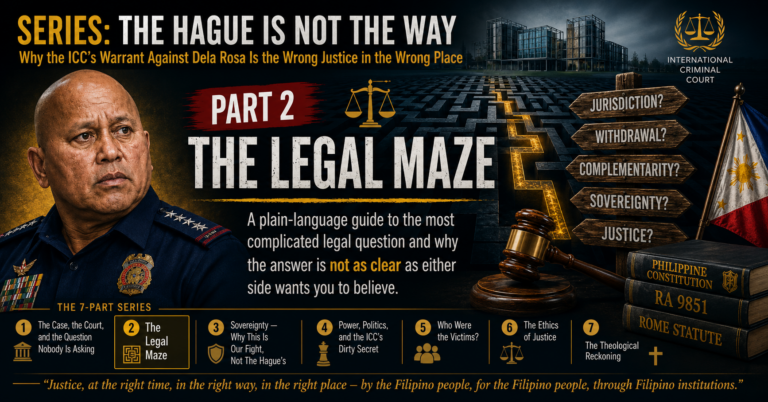
Did the ICC even have the legal authority to issue a warrant against Bato Dela Rosa in the first place? The government moved to arrest him. The media called it justice. But that question, the most important legal question in this entire controversy is one that even some of the ICC’s own judges could not agree on. This post breaks down why, in plain language. We look at what the Rome Statute actually says about countries that leave the ICC, why the Philippines walking out in 2019 created a legal problem that goes all the way to the heart of who we are as a sovereign people, why there are three specific legal arguments that make the Dela Rosa warrant even more legally shaky than the Duterte case, and why the strongest argument in this whole debate is not about politics at all, it is about the sovereignty of our Constitution, the dignity of our courts, and the Filipino people’s own right to decide what justice looks like on their soil. The answer, this post argues, is not a court in the Hague. It never was. For the complete legal and multidisciplinary analysis, download the full scholarly paper linked at the end of this post
The Hague Is Not The Way, Part 1: The Case, the Court, and the Question Nobody Is Asking
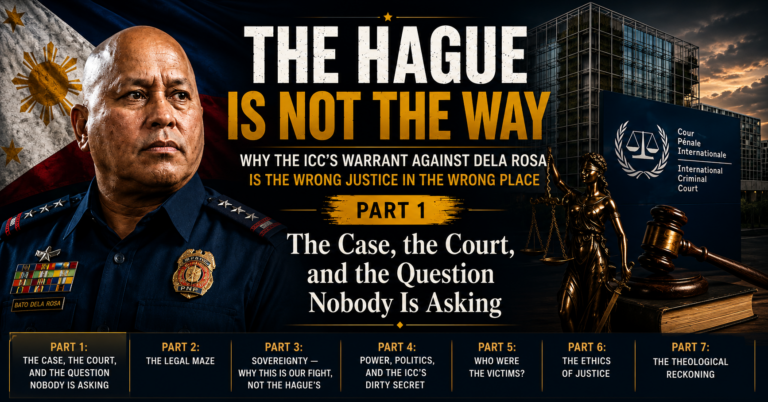
The ICC issued an arrest warrant against Senator Ronald “Bato” Dela Rosa. Everyone has an opinion. Very few have a framework. Before we debate guilt or innocence, we need to ask the question nobody is asking: is the ICC even the right court? This series breaks down a 62-page scholarly paper into plain, accessible language that any reader can follow. For those who want the full academic treatment, the complete paper with all citations, legal analysis, and theoretical frameworks is available for free download at the end of each post. This is Part 1 of 7 of a multidisciplinary, cross-disciplinary, and normative transdisciplinary scholarly series examining the case through nine academic lenses integrated through a theological meta-framework. The answer may surprise you.
Pragmatism, Peace and the Presidency: Why VP Sara Duterete should resign
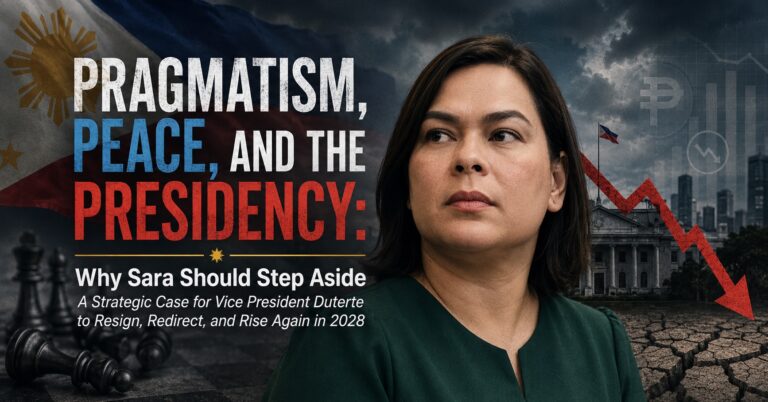
With GDP growth at a five-year low, OFW remittances threatened by the US-Iran conflict, and the Senate lurching through its second leadership change in months, the Philippines cannot afford its current political paralysis. The Philippines is bleeding economically while its leaders wage political war. In the article, I present the best pragmatic, strategic, and moral argument that Vice President Sara Duterte voluntarily resign. It is not an act of surrender, it is the shrewdest political move available to her. The 2028 path clears. And a nation desperate for statesmanship finally gets it. FULL paper can be downloaded at the end of the post.
When ‘The Prenup’ Stops Being Romantic Comedy

The controversy surrounding a celebrity prenup has reignited a question Philippine law actually has an answer to. Can a prenup dictate where you live, how you speak to your spouse, or who gets your children if the marriage fails? Under Philippine law, the answer depends on a line the Family Code draws — and that courts are empowered to enforce
The Sotto Gambit Meets Reality: What Yesterday’s Senate Leadership Change Means for the Theory
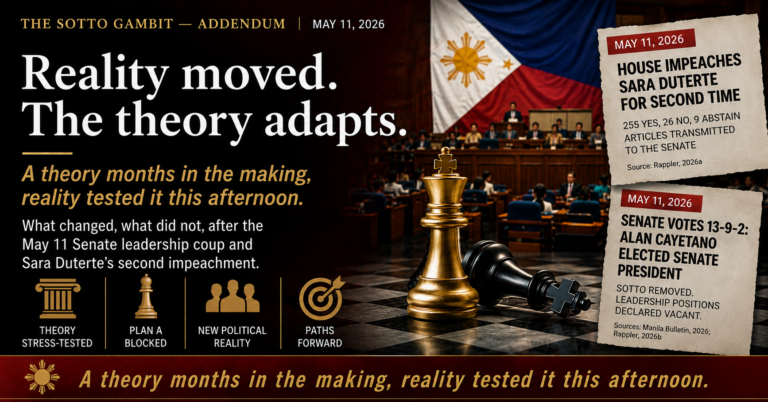
Five days ago, the Sotto Gambit launched: a political theory months in the making, published as a seven-part blog series with a full accompanying policy paper. Plan A proposed a constitutional reset anchored on Sara Duterte’s Senate conviction and Vicente Sotto III’s appointment as Vice President. Yesterday, Sotto was ousted as Senate President by a 13-9 vote, Alan Peter Cayetano took his place, and the Senate math made Sara’s acquittal virtually certain. This addendum does not hide from those developments. It accounts for them directly, honestly, and without spin. Here is what changed, what did not, and where the theory goes from here.
- « Previous Page
- 1
- 2
- 3
- 4
- 5
- …
- 9
- Next Page »