
Question: In the KJV Acts 6:8 describes Stephen as being “full of faith and power” while modern Bible translations describe him as being “full of grace and power.” KJV Onlyist insist that modern translations are wrong and some extremist even go as far as saying that modern translation translate it this way because they support the perpetual virginity of Mary as modern translations uses “full of grace” in describing Stephen in the same way as Mary is being described as “full of grace” Roman Catholics.
In this particular text, Acts 6:8, the Majority Texts which is the basis of the KJV, uses “pisteos” (faith), whereas several older manuscripts, the underlying Greek text used by most modern translations employs “charitos” (which means conveying grace or favor).
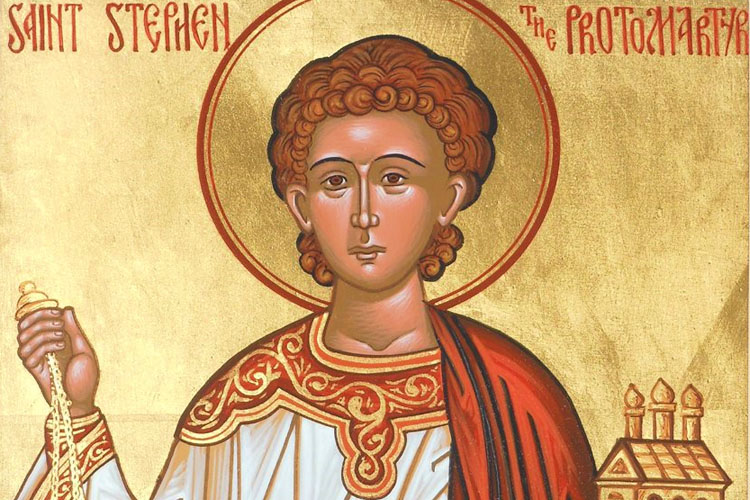
image from youth.rcdow.org.uk
(Acts 6:5) And the saying pleased the whole multitude: and they chose Stephen, a man full of faith and of the Holy Ghost, and Philip, and Prochorus, and Nicanor, and Timon, and Parmenas, and Nicolas a proselyte of Antioch.
There are actually four major manuscript variants here. Philip W. Comfort extensively discuss this in his Comfort Text Commentary:
“1. WH NU: “πλήρης χάριτος καὶ δυνάμεως” – “full of grace and power”
Supported by Manuscripts: 𝔓8 𝔓45 𝔓74 ℵ A B D 0175 33 1739
As translated by: NKJVmg RSV NRSV ESV NASB NIV TNIV NEB REB NJB NAB NLT HCSB NET
2. Variant 1/TR: “πληρης πιστεως και δυναμεως” – “full of faith and power”
Supported by Manuscripts: Maj syrh
As translated by: KJV NKJV
3. Variant 2: “πληρης χαριτος και πιστεως και δυναμεως” – “full of grace and faith and power”
Supported by Manuscript: E
As translated by: none
4. Variant 3: “πληρης πιστεως χαριτος πνευματος και δυναμεως” – “full of faith, grace, Spirit, and power”
Supported by Manuscripts: Ψ
As translated by: none
The WH NU reading has extraordinarily good documentary support. (The support of 𝔓45 for WH NU, though listed as “vid,” is certain—see Text of Earliest MSS, 187). The variants are the result of scribal harmonization and expansion. Each of the three variants likely borrowed from 6:5, which speaks of Stephen being full of faith and the Holy Spirit. TR incorporated the first variant, which was then popularized by KJV.”
Considering that “full of grace and power” is supported by the most number of manuscripts not to mention among the earliest manuscripts, textual critics obviously did not have to make a hard decision as to which among the variants is the most likely to be the that reflects the wordings of the original text. As such it is more logical to conclude that modern translations are correct on this matter.
As to the discussion with regards to Mary ? I do not actually see the connection with regards to this matter. The choice of words (“full of grace” in this case) of modern Bible translations is not base on siding with the Roman Catholic with regards to belief on the perpetual virginity of Mary but rather based on logic and deciding base on the best available evidence. The issue about support for Mary’s perpetual virginity is Irrelevant and immaterial to Acts 6:8 and reflective of the laughable extraordinary conspiracy theory thinking and leap of imagination exhibited by a lot of KJV Onlyists.
 Hi ! my name is Zigfred Diaz. Thanks for visiting my personal blog ! Never miss a post from this blog. Subscribe to my full feeds for free. Click here to subscribe to zdiaz.com by Email
You may also want to visit my other blogs. Click here to learn more about great travel ideas.
Hi ! my name is Zigfred Diaz. Thanks for visiting my personal blog ! Never miss a post from this blog. Subscribe to my full feeds for free. Click here to subscribe to zdiaz.com by Email
You may also want to visit my other blogs. Click here to learn more about great travel ideas.
Leave a Reply